What Phone Battery Health Really Means and When to Replace
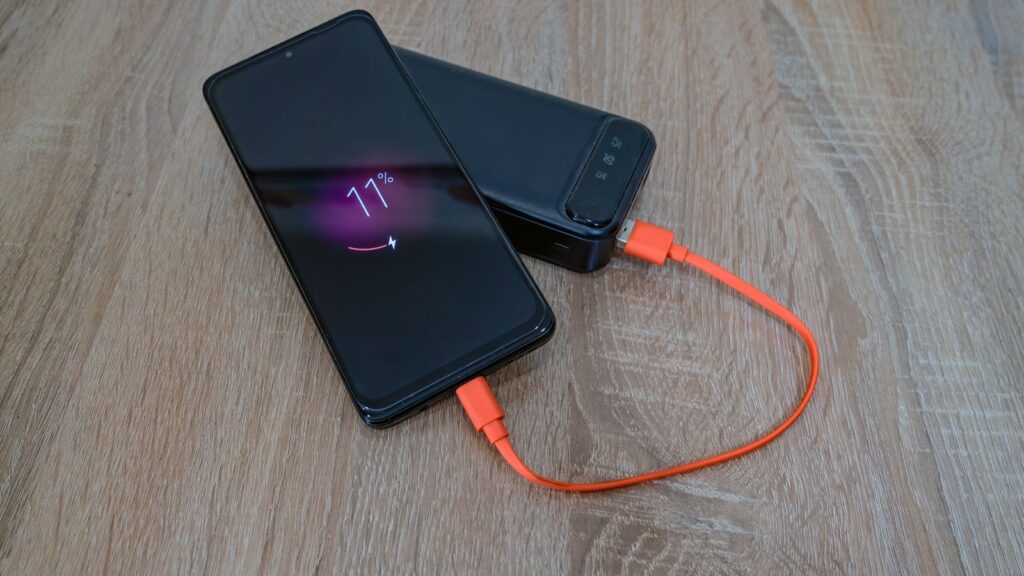
Quick answer: “Battery health” is a percentage that compares how much charge your phone’s battery can hold today with how much it could hold when it was new. A number in the 80s or 90s is normal aging, not a problem. Think about a replacement when the phone no longer lasts through your day, when it shuts down or slows down unexpectedly, or when the health screen itself says the battery is worn. If the phone’s back is bulging or the screen is lifting, stop using it right away.
Key takeaways
- Battery health is capacity compared with new, not a grade for how you treat the phone.
- Apple and Google both treat roughly 80% as a meaningful line, but neither says “replace at exactly 80%”. Your daily experience matters more than the number.
- Most charging “rules” are myths; heat and keeping the battery pinned at 100% for long stretches matter more than topping up.
- Compare official service, a third-party shop and the do-nothing option on price, parts, warranty and how long you plan to keep the phone.
- A swollen battery is a safety issue, not a battery-life issue.
What battery health actually measures
Your phone uses a lithium-ion battery, and every one of those wears out slowly. Each time you use up the equivalent of a full charge, the battery loses a tiny bit of its ability to hold energy. Battery health is simply the phone’s estimate of that loss.
On an iPhone, the Battery Health screen shows maximum capacity, which Apple describes as the battery’s capacity measured against what it was when new. It also has a section on peak performance capability. Apple explains that an older, more worn battery can have trouble delivering sudden bursts of power, and the message in that section depends on the battery’s condition. In other words, the percentage is about how much it holds, and the message is about how well it delivers.
One detail that surprises people: the number is an estimate, and it can be recalibrated. Apple’s support page on recalibration says the reported figures get adjusted over time with regular charge cycles, and that the process can take a few weeks. So a reading that seems odd, or one that jumps after an update, is not automatically a sign your battery fell off a cliff.
What the manufacturers say about “normal”
Apple publishes a design target. As of November 2026, its support page says iPhone 14 and earlier batteries are designed to keep 80% of their original capacity at 500 complete charge cycles under ideal conditions, and iPhone 15 models are designed for 1,000 cycles. A “cycle” is not one plug-in: it is the use of an amount of energy equal to a full battery, so two days of charging from 50% to 100% make one cycle. Apple also notes that real-world results depend on how you use and charge the phone.
Google’s Pixel help page takes a similar approach, and it adds that lithium-ion batteries have a limited number of charge cycles and will eventually need replacing. On supported phones, Settings shows a battery health status under Battery. On Pixel phones, “Normal” means the capacity is in the normal range, “Reduced” means Google recommends replacing the battery, and “Unavailable” means the phone cannot determine the status. Google says the feature is limited to Pixel 8a and later, and that older models, including the Pixel 7 and 8 series, do not show a health status at all.
Samsung’s pages take a different angle. They focus on a Protect battery setting and on the Battery and Device Care area, which runs a diagnostic. The Samsung pages cited here give no replace-it percentage, so lean on the diagnostic plus your own experience.
The takeaway: roughly 80% shows up repeatedly as a meaningful marker, but it is a rule of thumb, not a deadline. A phone at 82% that dies at lunch needs attention sooner than a phone at 78% that comfortably makes it to bedtime.
Where to find the number on your phone
| Phone | Where to look | What you get |
|---|---|---|
| iPhone | Settings, Battery, Battery Health | Maximum capacity percentage and a peak performance message |
| Pixel 8a and later | Settings, Battery, Battery health | Status of Normal or Reduced, plus capacity details |
| Older Pixel models | No health status in the settings | Judge by real-world battery life |
| Samsung Galaxy | Settings, Battery and Device Care | A diagnostic result; wording varies by model and software version |
| Other Android | Varies by brand | Check the maker’s support page for your exact model |
Charging habits: myths versus what helps
- Myth: charging overnight ruins the battery. Phones stop drawing power once full. Samsung’s optional charge cap and Google’s battery health assistance suggest the makers see long stretches at a high charge as the thing to manage, not the plug-in itself.
- Myth: you must drain it to zero before charging. That advice comes from older battery types. The manufacturer pages cited here do not ask you to do it.
- Fact: an optional charge limit can help. Samsung’s Protect battery setting caps charging at 85% and is off by default. Google describes a battery health assistance feature on some Pixels that eases charging as the battery ages.
- Fact: heat is not your friend. The sources cited here do not give an exact temperature range, so this article does not either. The practical rule is simple: do not leave the phone on a sunny dashboard, under a pillow while charging, or inside a thick case that traps warmth during heavy use.
- Mostly myth: third-party chargers always damage the battery. A cheap, uncertified charger is a safety risk, so buy from a reputable maker and look for certification.
If you only change one habit, use your phone’s built-in charge management setting and keep it out of the heat. Everything else is minor.
When replacing the battery makes sense
A battery swap is usually cheaper than a new phone, but it only makes sense in the right situation. Use these signs as a checklist:
- The phone no longer gets through a normal day, even after a restart and checking which apps drain power.
- The health screen reports around 80% or lower, or shows a message saying the battery is significantly degraded.
- The phone shuts off at 20% or 30%, or drops suddenly.
- Apps launch slowly or the phone stutters, and the peak performance message points to the battery.
- You plan to keep the phone for at least another year, and the rest of it still works well and still gets software updates.
It is probably not worth replacing the battery if the phone is no longer getting security updates, the screen is cracked and the repair bill adds up, or you were planning to upgrade in a few months anyway.
Before you pay, rule out software. A recent update, a misbehaving app or poor signal can make a healthy battery look weak. Restart, update apps and check the battery usage list first.
Comparing replacement options
Prices differ by model, country and shop, and they change, so I am not quoting any. Get a current quote from each option and ask the same questions each time.
| Question to ask | Manufacturer or authorized service | Independent repair shop |
|---|---|---|
| What is the total price, including tax and any diagnostic fee? | Published or quoted by the maker | Quote varies by shop and part grade |
| What parts are used? | Genuine parts | Ask whether they are genuine, refurbished or aftermarket |
| How long is the repair warranty? | Ask what the repair itself is covered for | Ask for the warranty in writing |
| Does it affect my existing warranty or protection plan? | Generally no, since it is the maker’s own service | Ask the maker whether a non-authorized repair changes your coverage |
| How long will I be without the phone? | Varies; ask about same-day or mail-in | Often same day, but confirm |
| Is my data safe? | Back up first; you may need to turn off tracking features | Back up first and ask what access they need |
Two points to check before you commit. First, Apple’s support page says the one-year limited warranty covers a defective battery, which is different from ordinary wear, and that out-of-warranty battery service is charged. If you have a paid protection plan, read its terms, because some plans cover a battery that falls below a stated capacity and others do not. Second, ask any shop what happens if the replacement battery fails early, and get the answer in writing.
A simple decision rule: if the quote for a new battery is a small fraction of what a comparable phone costs and the phone is otherwise healthy, replace it. If the quote approaches half the price of a decent replacement phone, start comparing phones too.
Safety: swelling means stop
This is the one situation where you should not wait for the next payday. Signs of a swollen battery include a back cover that is bulging, a screen that is lifting at the edges, a case that no longer fits, or a phone that rocks when it lies flat on a table. A swollen lithium-ion battery can leak, overheat or catch fire, so the general advice from manufacturers and repair services is the same.
- Stop using and stop charging the phone.
- Power it down if you can do so safely.
- Keep it away from beds, sofas, paper and anything flammable, ideally on a hard, non-flammable surface.
- Do not press on it, puncture it or try to open it yourself.
- Contact the maker or an authorized service provider and say that the battery is swollen. Ask where to bring it.
- Do not put it in household trash. Ask the service provider or a local electronics recycler how to dispose of it.
A hot phone, a burning smell, smoke or a hissing sound is an emergency. Move away from it and call your local emergency number.
Frequently asked questions
Is 85% battery health bad?
No. That is ordinary aging. The two major platforms use about 80% as a meaningful marker, and an 85% battery is still above it. Judge it by whether the phone lasts through your day.
Does fast charging damage my battery?
Phone makers ship fast charging as a normal feature. I did not find a manufacturer page saying it harms the battery, but heat is the thing to watch, so avoid fast charging while the phone is covered, in direct sun or running heavy apps.
Why did my battery health drop after an update?
It may have been recalibrated. Apple notes that the reported capacity can be adjusted over time as the phone completes regular charge cycles, and that this may take a few weeks. If battery life is also worse, then consider service.
Will a new battery make my old phone feel fast again?
Sometimes, if slowdowns were caused by the worn battery limiting power. It will not fix slowness from old hardware or full storage.
Before you decide
Look at the number, then look at your actual day. If the phone still gets you home with some charge left, leave it alone and turn on a charge-limit option. If it fails you, price the official route and one independent shop, ask about warranty on both, and back up first. And if the phone is swollen, skip the comparison shopping: stop using it today.
Sources
- iPhone battery and performance, Apple Support
- About recalibration of battery health reporting in iOS 14.5 or later, Apple Support
- Understand your Pixel battery, Pixel Phone Help (Google)
- Protect battery feature in Galaxy phones, Samsung Support
Last updated: November 2026. This article is general information, not consumer advice.