IP67 vs IP68: What a Phone Water Rating Really Promises
Quick answer: “Water resistant” is not “waterproof”, and the IP code on the box is a lab result, not a usage licence. The first digit covers dust and solid objects (0 to 6); the second covers water (0 to 9). IP67 means the device passed a dunk in still water up to 1 meter deep for 30 minutes. IP68 means it passed a tougher immersion test whose depth and time the manufacturer sets itself, which is why one IP68 phone is tested at 1.5 meters and another at 6. The tests use fresh water, the seals wear out, and both Apple and Google say outright that liquid damage is not covered by their warranty. Treat the rating as cover for accidents, not as permission to swim.
Key takeaways
- The IP code comes from IEC 60529, an international standard. The IEC’s own position is that the rating shows how a device was tested, not the conditions it can be used in.
- IP68 is not one fixed promise. Apple lists 6 meters for up to 30 minutes for iPhone 12 and later; Samsung lists 1.5 meters for 30 minutes for Galaxy phones.
- An X is not a zero. IPX4 or IPX8 means no rating is stated for dust, nothing more.
- A higher water digit is not better at everything. The immersion ratings (7 and 8) do not have to pass the water-jet tests (5 and 6).
- Resistance fades with wear, drops and age, and it cannot always be restored.
Where the code comes from
Most people assume “IP68” is a durability grade a phone earns, like a star rating. It is rather less than that. IP stands for Ingress Protection, and the code comes from IEC 60529, a standard from the International Electrotechnical Commission. The IEC says the first edition was published in 1976. It was written for electrical enclosures in general, the same system used for junction boxes and outdoor lights, so that vague words like “waterproof” could give way to a defined test.
What the standard does not do is tell you how to live with the product. In a 2020 IEC article, the convenor of the team that maintains IEC 60529 said the standard is “only describing the way to test products — not more, not less.” The IEC’s summary of that: an accidental drop in the pool may be fine for a smartphone, but it is best not to use it as an underwater camera.
How to read the two digits
The code is always “IP” plus two characters. The first is protection against solid objects, on a scale from 0 (none) to 6 (no dust gets in). The second is protection against liquids, from 0 (none) to 9 (high-pressure hot water from different angles). If a maker has only tested one of the two, the other is written as X.
For gadgets, a handful of values do most of the work. On the solids side, 4 means protection against objects larger than 1 millimeter, 5 means partial protection against dust, and 6 means full protection. On the water side, 4 means splashes from any direction, 5 and 6 mean water jets, 7 means immersion for up to 30 minutes at depths up to 1 meter, and 8 means immersion beyond that on terms the manufacturer sets.
| Code | What the digits say | Where you will see it (maker pages, checked November 2026) |
|---|---|---|
| IPX4 | No dust rating stated; splashes | AirPods Pro 1, AirPods 3 |
| IP54 | Partial dust protection; splashes | AirPods 4; Galaxy A16 and A17 |
| IP57 | Partial dust protection; immersion to 1 m for 30 minutes | AirPods Pro 3 |
| IP67 | Dust-tight; immersion to 1 m for 30 minutes | iPhone SE (2nd and 3rd generation); Galaxy A56 5G |
| IP68 | Dust-tight; deeper immersion, terms set by the maker | iPhone 12 and later (6 m, 30 minutes); Galaxy S series (1.5 m, 30 minutes) |
| IPX8 | No dust rating stated; immersion to 1.5 m for 30 minutes | Galaxy Z Fold5 and Z Flip5 |
| IP48 | Solid objects over 1 mm only; immersion to 1.5 m for 30 minutes | Galaxy Z Fold6, Z Flip6, Z Fold7 and Z Flip7 |
One line in that table deserves a second look. IP48 sounds close to IP68, but the 4 only covers objects larger than a millimeter, which fine dust is not. The code says so, if you read the first digit.
IP68 is not one promise
Here is the fine print that matters most. For the water digit 8, the standard leaves the exact test to the manufacturer. An IEC explainer from 2018 puts the floor at 1 meter for 30 minutes with no harmful effects, and notes that makers’ tests above that floor can vary.
They do vary. Apple’s support page (dated October 28, 2026) lists IP68 with a maximum depth of 6 meters for up to 30 minutes for iPhone 12 and later, 4 meters for iPhone 11 Pro, and 2 meters for iPhone 11 and iPhone XS. Samsung’s UK support page (updated April 15, 2026) says its IPX8 test means 1.5 meters of fresh water for 30 minutes, with the phone left still. Same code, a fourfold difference in depth.
So when two phones both say IP68, compare the footnotes, not the badge. And notice how Google words its own claim: Pixel phones are designed to comply with IP68 when each device leaves the factory. That is a statement about day one.
What the label does not say
The lab test is a clean, calm event. Your life is not. The manufacturers’ own pages list the gaps.
- Fresh, still water only. Samsung’s test uses fresh water with no movement. Its avoid list includes salt water, pool water, soapy water, sunscreen and liquids containing alcohol. Apple says to clean an iPhone promptly after contact with soap, lotion, sunscreen and similar substances.
- No pressure. Apple tells iPhone owners to avoid pressurized or high-velocity water, and gives showering, surfing and jet skiing as examples. This is consistent with the code itself: according to the technical guide published by RS, an electronics components supplier, items rated 7 or 8 for immersion need not meet the jet tests behind 5 and 6.
- No heat or steam. Apple, Samsung and Google all tell you to keep phones out of saunas or steam rooms.
- Not forever. Apple says resistance is not permanent and may decrease with normal wear. Samsung says it weakens over time. Google says normal wear and tear can reduce it, and tells owners to avoid chips and cracks.
- Not under warranty. Apple: liquid damage is not covered under warranty, though you might have rights under consumer law. Google: water damage is not covered by warranty. Samsung’s page does not state its warranty position, so check the terms for your country.
Google’s list is the bluntest: do not submerge the phone, and do not take it into a sink, shower, bathtub or pool. This is rarely what the launch video suggests.
Watches and earbuds play by different rules
Smartwatches often skip the IP water digit altogether and quote meters instead. Apple says Apple Watch Series 2 and later are rated to 50 meters under ISO standard 22810:2010, a standard for water-resistant watches. That figure is not a diving depth. Apple says those models suit shallow-water activities such as swimming in a pool or the ocean, and should not be used for diving or water skiing. Only Apple Watch Ultra, rated to 100 meters, is cleared by Apple for recreational scuba, and then to 40 meters.
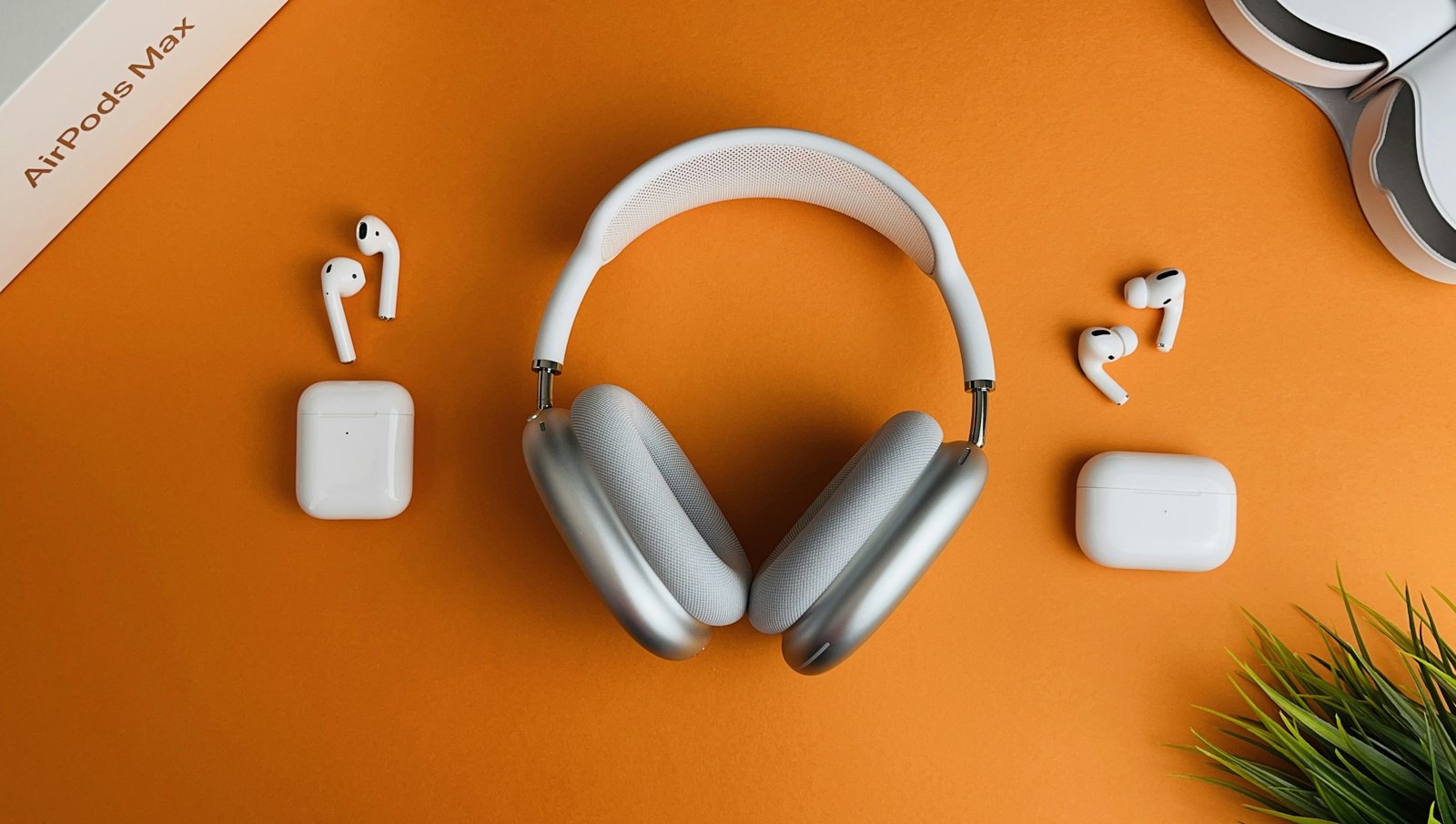
Earbuds sit lower. Apple’s page lists IPX4 for AirPods Pro 1 and AirPods 3, IP54 for AirPods 4, and IP57 for AirPods Pro 3. Apple still says none of them are waterproof or sweatproof, and none are meant for swimming or showering. Check the case too: the charging cases for AirPods Pro 1 are not water resistant at all. And Apple says AirPods and Apple Watch cannot be rechecked or resealed.
If your phone gets wet anyway
These steps come from the Apple, Samsung and Google support pages. Your model’s own instructions take priority.
- Lift it out and turn it off. Unplug any cable or accessory.
- Wipe it with a soft, lint-free cloth.
- Hold it with the charging port facing down and tap it gently against your hand to shift water out of the connector (Apple’s method).
- Leave it somewhere dry with some airflow, at room temperature. A fan blowing cool air toward the port can help.
- Skip the shortcuts. No hair dryer or other heat source, no compressed air, and nothing pushed into the port, including cotton swabs and paper towel.
- Wait before charging by cable. Apple says at least 5 hours; Samsung says not until the port is completely dry.
- If the speaker sounds muffled, give it time to dry. If anything else misbehaves, book a repair.
A checklist before you pay extra for a rating
- Find the exact code on the manufacturer’s spec or support page, not on a retailer’s banner.
- Read the footnote for the depth and the minutes. That is the real claim.
- Look at the first character. An X or a 4 matters if you are around sand, flour or workshop dust.
- Check every piece: the earbuds and their case, the watch and its band. Apple says leather and stainless steel watch bands are not water resistant.
- Buying used or repaired? Assume the seals are weaker than new. Apple lists drops and disassembly among the things that compromise resistance. Our guide to buying a used phone covers the other checks.
- If liquid damage would hurt your budget, see what a protection plan actually covers before relying on the rating. We compare the costs in Is a Device Protection Plan Worth the Cost?
Frequently asked questions
Can I swim with an IP68 phone?
The makers say no. Apple lists swimming and bathing with an iPhone among the things to avoid. Google says not to take a Pixel into a pool. Samsung warns against pool water and salt water.
Is IP68 always better than IP67?
For immersion depth, usually, but check the stated numbers: the IP67 test is fixed at 1 meter, while IP68 is whatever the maker tested beyond that. Neither rating says anything about showers, jets or salt water.
What does the X in IPX4 mean?
It means no rating is given for that position. IPX4 states a splash rating and makes no claim about dust. It does not mean zero protection, only that nothing is certified.
Does water resistance last as long as the phone?
No. Apple, Samsung and Google each say it can decrease with normal wear, and Apple and Samsung add that drops and impacts can reduce it further. Treat an older or cracked phone as unsealed.
Before you decide
An IP rating is worth having, but it describes a new device, in clean still water, for half an hour, in a lab. Buy it for the accident you did not plan, read the depth and time in the footnote, and keep the phone out of the pool regardless.
Sources
- Ingress Protection (IP) ratings, International Electrotechnical Commission
- How waterproof is your phone?, International Electrotechnical Commission (February 2020)
- How to know if your smart phone is *really* waterproof, International Electrotechnical Commission (February 2018)
- About splash, water, and dust resistance of iPhone 7 and later, Apple Support (October 2026)
- About Apple Watch water resistance, Apple Support (September 2026)
- About the sweat and water resistance of AirPods Pro, AirPods 3, AirPods 4, and AirPods 5, Apple Support (September 2026)
- Galaxy Phone Water Resistance, Samsung UK (April 2026)
- Help prevent water damage to your Pixel phone, Google Pixel Phone Help
- Pixel phone hardware tech specs, Google Pixel Phone Help
- IP Ratings Explained, RS (last modified November 2026)
Last updated: November 2026. This article is general information, not technical or warranty advice.